Category: Yoga

  • The Myth That Yoga and Meditation Retreats Are Only for the Young
    The Myth That Yoga and Meditation Retreats Are Only for the Young

    The Myth That Yoga and Meditation Retreats Are Only for the Young

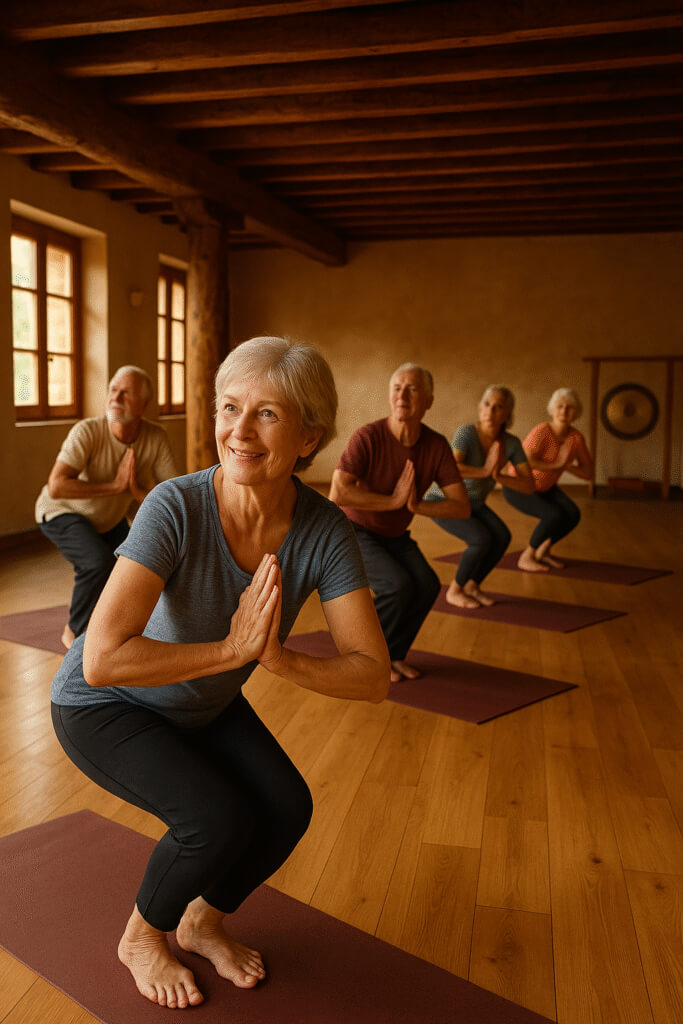
    Mujer mayor practicando yoga con serenidad en una clase para seniors en Navarra

    One of the questions we hear most often during our retreats is:
    “Am I too old to do yoga?”

    It’s an understandable doubt. We’re surrounded by images of young, flexible, athletic bodies performing almost impossible poses. And when we compare ourselves, it’s easy to think yoga is no longer “for me.”

    But the reality is very different. Yoga — and yoga retreats — have no age limit. They never did. Modern marketing has simply made us believe it only counts if your body can bend like elastic. That simply isn’t true.

    Yoga is not an elite sport. It’s a path of self-awareness and self-care that adapts to each person, to their stage of life, and to their individual needs.

    As Long As You Can Walk, You’re Welcome

    Sometimes the simplest answer is the most truthful: as long as you can walk, you can practice yoga.

    Yoga asks nothing of you except presence. There’s no record to break. No condition to meet.

    In fact, with age you don’t come with less — you come with more.
    More experience.
    More lessons learned.
    More challenges overcome.
    More wisdom.

    And that makes the inner journey yoga offers resonate on a deeper level.

    In our retreats, it is often the older participants who enrich the group the most — through calmness, deep listening, and quiet strength.

    Yoga Is Not About Age. It’s About Feeling.

    There is something important I will always repeat: yoga doesn’t adapt to age — it adapts to the person.

    Each breath, each posture, each moment of silence can be adjusted so you experience it from exactly where you are today.

    Do you want to improve flexibility? Yoga can help.
    Do you want inner peace and mental clarity? Yoga can help.
    Do you want to reconnect with your body after years of disconnection? Yoga can help.
    Do you want to slow down sarcopenia (the natural loss of muscle mass with age) and maintain strength? Yoga can help.

    Whether you are 30, 50, or 70, what changes is not whether you can do it — but how you will experience it.

    Does Age Matter?

    Yes, it does.
    But not in the way you might think.

    If you are very young, you may be in a stage of life where you are seeking different experiences, have other interests, or perhaps haven’t yet developed the maturity to fully embrace what a retreat offers. And that’s perfectly fine. Everything comes in its own time.

    If you already have life experience, you stand on fertile ground for yoga to become a deep ally.

    Age is not a barrier. It’s an advantage.

    No Experience? Starting Is Enough

    Another common concern is:
    “What if I have no experience in yoga or meditation?”

    The answer is simple: you begin when you begin. You don’t need a spiritual résumé or years of practice. You only need the willingness to start.

    Yoga is a tool, not an exam. And like any tool, it’s learned by using it.

    In our retreats, each person is on their own journey. Some have practiced for years. Others barely know what a Sun Salutation is. And everyone belongs. Everyone grows.

    Yoga doesn’t ask you to prove anything. It asks you to open yourself to who you are — and begin from there.

    The Benefits of Yoga at Any Age

    Yoga offers different benefits depending on the stage of life you are in:

    In your 30s and 40s: it helps balance stress, restore energy, and reconnect with yourself in the midst of a fast-paced life.

    In your 50s and 60s: it supports flexibility, mobility, better sleep, and mental clarity. It becomes a way of caring for your body so you can continue enjoying life fully.

    In your 70s and beyond: it becomes a companion of calm, gentleness, and well-being. Practice focuses on mindful movement, breathwork, and meditation — enhancing overall quality of life.

    Yoga is not a “someday” or a “too late.”
    It is always a “now.”

    Yoga in Community: Age Dissolves

    One of the most beautiful aspects of practicing yoga in a group is how the idea of age fades away.

    On the mat, we are all beginners — even after decades of practice.

    In a retreat, diversity becomes richness:

    Youth brings freshness and enthusiasm.
    Maturity brings serenity and perspective.
    The combination creates a unique space where each person finds what they need.

    And that’s when we realize yoga is not about age — it’s about shared humanity.

    Your Moment Is Now

    If you have ever thought, “It’s too late for me,” let me tell you clearly: it isn’t.

    Age is not a finish line that excludes you from yoga. It is part of your story — the experiences you bring with you — and your life can still be filled with new ones.

    Yoga does not adapt to a perfect body or a perfect timeline. It adapts to you. And the simple fact that you are considering it is already enough.

    Yoga Opens When You Open

    Yoga has no age because life has no age limit for learning, growing, and caring for yourself.

    Every day you choose to breathe consciously, move gently, and meditate calmly, you are practicing yoga.

    Anyone can do that. At any moment in their life.

    If you have curiosity and willingness, you already have everything you need.

    So as long as you can walk — and above all, as long as you want to live with greater presence — yoga is waiting for you.
  • Beer or Inner Connection? Why a Retreat Can Be More Transformative Than a Vacation

    Beer or Inner Connection? Why a Retreat Can Be More Transformative Than a Vacation

    Beer or Inner Connection? Why a Retreat Can Be More Transformative Than a Vacation

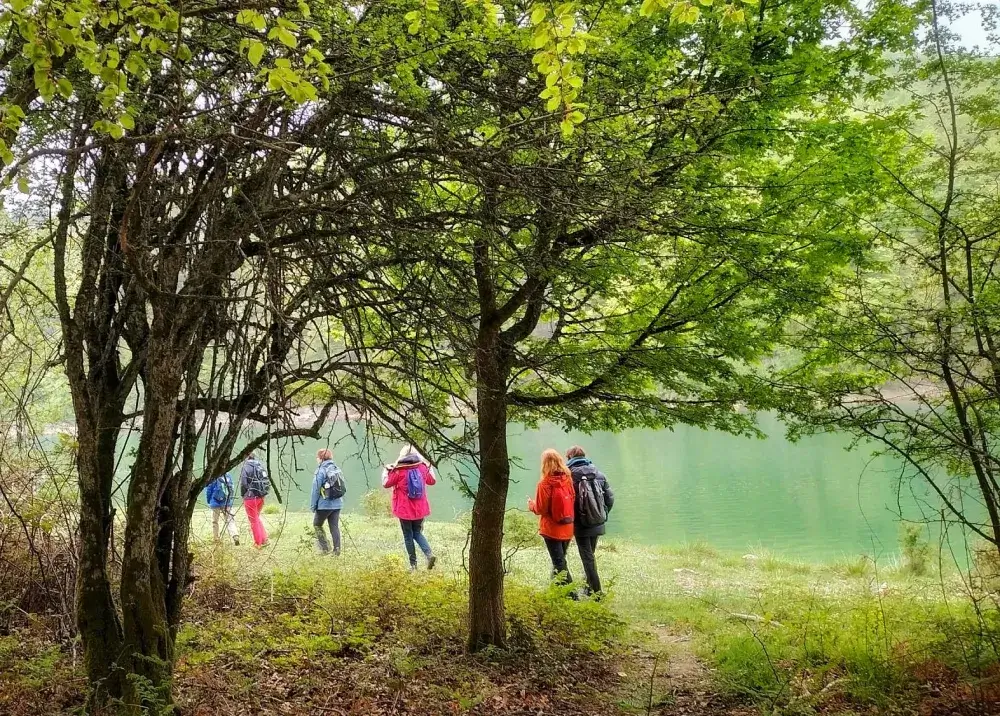
    Grupo caminando junto a un lago rodeado de bosque durante un retiro de yoga en la naturaleza

    Have you ever come back from a holiday feeling almost as tired as when you left?

    Between airports, packed itineraries, endless sightseeing and the pressure to “make the most of every minute,” what should feel like rest often turns into another marathon.

    There is another way to give yourself time: a yoga and emotional wellbeing retreat.

    This isn’t about escaping the world. It’s about reconnecting with yourself and with nature.
    A retreat is not avoidance — it’s transformation. And the effects last far longer than a tan or a weekend of drinks with friends.

    Vacation vs Retreat: What Do You Really Need?

    When you think of a holiday, you might picture beaches, restaurants, city breaks or adventure travel. And yes, that can be fun. But it often doesn’t provide the deep rest your body and mind truly need.

    Traditional Holidays

    • You change locations, but your mind stays busy.
    • You fill your schedule with flights, photos and activities.
    • When you return, routine takes over almost immediately.

    Yoga & Meditation Retreat

    • The schedule opens up — creating space for yourself.
    • You genuinely recover physical and mental energy.
    • You learn practical tools to manage stress and maintain calm long after you return home.

    A retreat is like pressing a reset button from within. It allows you to slow down, listen deeply, and reconnect with what truly matters.

    The Real Value of a Retreat: Emotional Wellbeing That Lasts

    Unlike a conventional holiday, a retreat is designed to transform you from the inside out.

    Especially in natural environments — mountains, forests, rivers — body and mind begin to align naturally.

    You experience:

    1. Deep Rest
      Stepping away from noise and screens reduces stress and improves sleep quality.
    2. Emotional Balance
      Meditation (dhyana), conscious breathing (pranayama), and yoga postures (asanas) help release accumulated tension.
    3. Practical Tools for Daily Life
      What you learn doesn’t stay at the retreat — you return home with techniques you can use anytime.
    4. Connection with Nature
      Walking through forests or listening to rivers creates a sense of inner peace that is hard to replicate in everyday life.

    The result? A wellbeing that doesn’t end when you unpack your suitcase.

    A Yoga Retreat: A Journey Inward

    You don’t need prior experience. This isn’t about perfect poses for social media — it’s about presence.

    A yoga retreat combines gentle practice, breathwork and silence. The benefits are both physical and emotional:

    • Reduced stress and anxiety
    • Improved flexibility and circulation
    • Greater mental clarity
    • A stronger mind-body connection

    Practiced in nature, these effects deepen even further.

    Why a Retreat Is More Transformative Than a Vacation

    If you return from holidays feeling like you need another break to recover, your body and mind may be asking for something different.

    A retreat transforms you because:

    • You don’t just disconnect — you reconnect with yourself.
    • You develop habits that support long-term wellbeing.
    • You create emotional memories, not just photos.
    • You experience real, lasting rest.

    While a holiday may refresh you briefly, a retreat replenishes you deeply.

    What If Your Next Journey Was Inward?

    Maybe what you need isn’t another trip — but a return to yourself.

    A retreat is not a luxury trend. It is an investment in your emotional wellbeing and quality of life.

    The drinks and social gatherings will always be there.
    But the inner connection you cultivate in a retreat? That changes everything.


  • Money as Energy: How to Let It Flow Consciously and Create a Better World

    Money as Energy: How to Let It Flow Consciously and Create a Better World

    Money as Energy: How to Let It Flow Consciously and Create a Better World

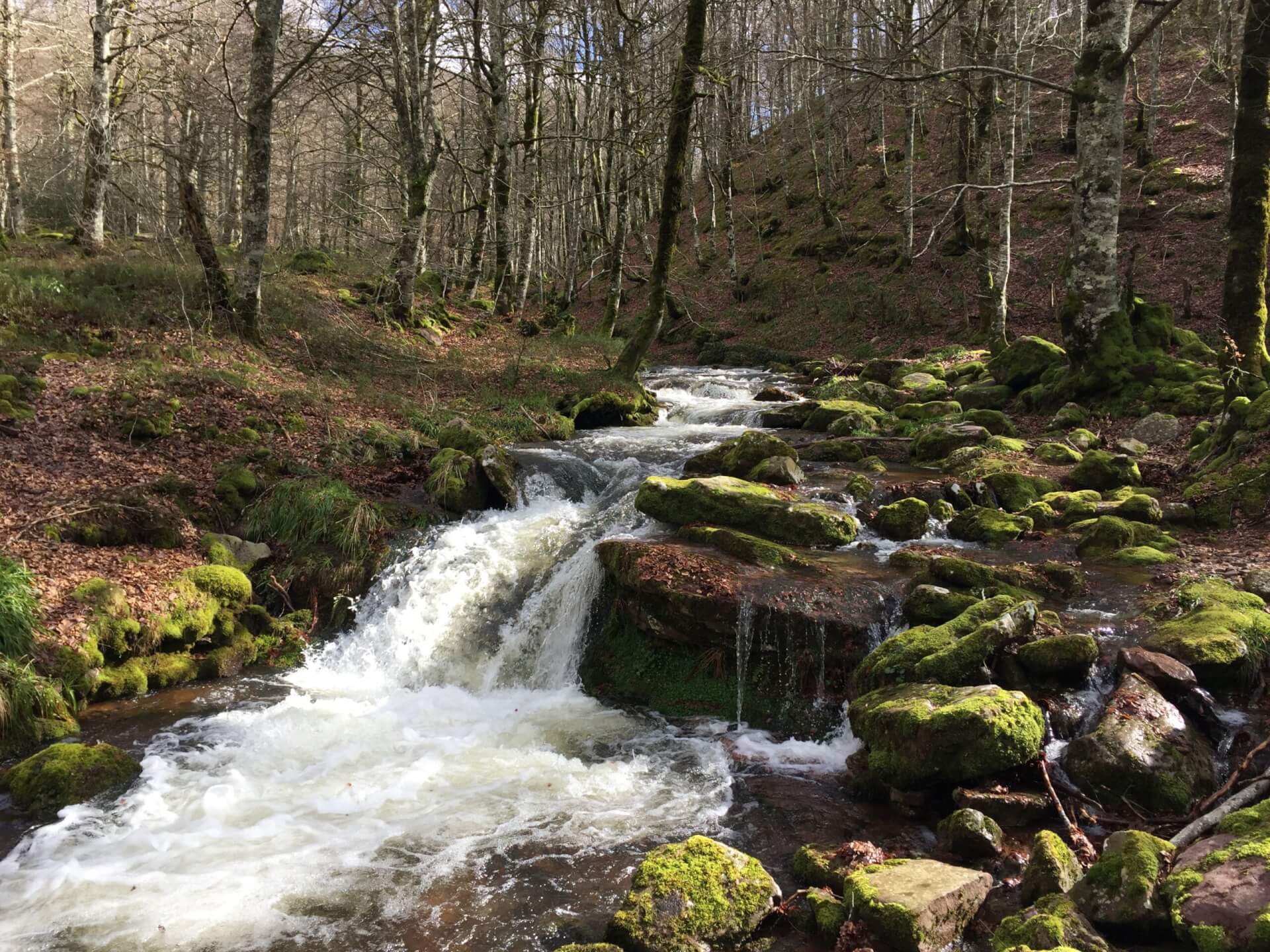
    Flowing river moving through a forest landscape, symbolizing money as energy in constant circulation that nourishes and transforms

    In yoga, we learn that everything is energy.

    Prana moves through the body.
    Breath regulates the nervous system.
    Attention shapes our experience.

    But when the conversation turns to money, something changes.

    The breath becomes shallow.
    The body tightens.
    The mind shifts into strategy — sometimes into survival.

    For many high-achieving women and men, money carries responsibility.
    Teams. Families. Decisions. Long-term consequences.

    Money stops feeling like energy.
    It starts feeling like pressure.

    But what if money is simply another form of energy?

    And what if our relationship with it could become a practice?

    1. Money Is Not the Goal. It Is the Channel.

    At its essence, money is an exchange of value.

    It represents time, creativity, skill, attention, service.
    It is stored life force.

    When someone pays for something, they are saying:

    • This matters.
    • I value this.
    • I want this to continue existing.

    Money flows toward what receives attention and intention.

    Like all energy, it can:

    • Expand
    • Contract
    • Transform
    • Distort

    Money itself does not shape the world.

    Consciousness does.

    2. Flow vs. Accumulation

    In nature, everything moves.

    Blood circulates.
    Water flows.
    Breath rises and falls.

    When energy stagnates, systems suffer.

    The same is true financially.

    • Accumulation driven by fear creates scarcity.
    • Investment aligned with purpose creates expansion.
    • Unconscious spending leaks energy.
    • Conscious circulation builds ecosystems.

    Money that flows with intention builds culture.

    3. Money Amplifies Who We Already Are

    Money does not change people.

    It amplifies them.

    From fear → it magnifies fear.
    From greed → it magnifies exploitation.
    From awareness → it magnifies creation.

    Every financial decision communicates something.

    Where you buy.
    Where you invest.
    Who you support.
    What you finance.

    Money is narrative in motion.

    4. How to Use Money to Create a Better World

    This is where philosophy becomes practical.

    A — Consume Consciously
    Every purchase is a vote. Support what reflects your values.

    B — Invest With Alignment
    Capital can build renewable energy, education, healthcare, regenerative systems — or whatever resonates deeply with your own ethics. The key is coherence.

    C — Pay With Dignity
    Fair compensation is respectful energy redistribution.

    D — Create From Abundance
    When you generate resources from purpose:

    • You do not compete from fear.
    • You do not sell from manipulation.
    • You do not create from artificial urgency.

    You create from service.

    And that changes markets.

    5. Personal Responsibility and Inner State

    Seeing money as energy removes victimhood.

    It is not about having or not having.

    It is about how you relate to what flows through your life.

    Powerful questions:

    • Does money contract me or expand me?
    • Do I use it to protect fear or express vision?
    • Are my financial decisions aligned with my values?

    Energy follows attention.
    Money follows energy.

    6. A More Conscious Economy Begins Within

    A better world is not created only by policies.

    It is created by millions of small decisions.

    When we:

    • Buy consciously.
    • Pay fairly.
    • Invest intentionally.
    • Create from purpose.

    We redirect collective energy.

    Money is not good or bad.

    It is a tool.

    A current.

    A force.

    A better world does not need more money.

    It needs more consciousness moving money.

    And it begins with a simple question:

    How do I want my energy to flow?


  • Winter: A Season for Inner Retreat and Contemplative Practice

    Winter: A Season for Inner Retreat and Contemplative Practice

    Winter: A Season for Inner Retreat and Contemplative Practice

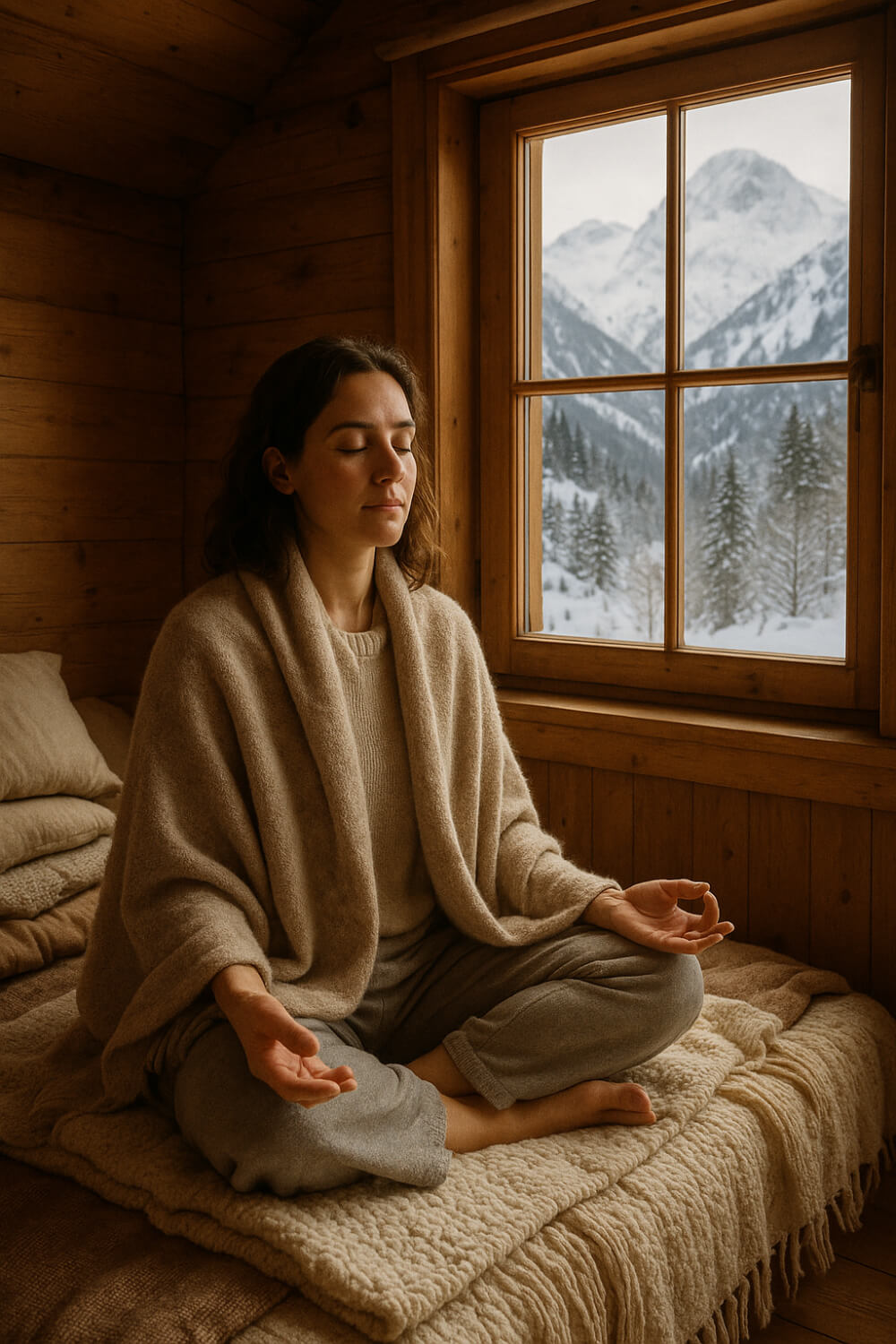
    Woman meditating in a wooden cabin overlooking snowy mountains, winter as a season of inner retreat and introspection

    When winter arrives, the world seems to slow down.
    Nature turns inward, trees shed their leaves, the air grows colder, and silence gently takes over. Colours soften, sounds fade, and life appears to retreat beneath the surface. At first glance, winter may feel like a pause — an in-between season, less vibrant than spring or summer.

    Yet winter is not an interruption.
    It is an invitation.

    A season of depth, inner listening and quiet transformation.

    In this journey through the seasons as an inner path, we invite you to see winter as more than a cold time of year. Winter is a threshold. A natural call to retreat, to soften your rhythm, and to reconnect with yourself from a place of calm. It is an ideal moment for stillness, for meditation, and for stepping away from daily demands to return to what truly matters.

    Winter Is Not a Pause — It Is Depth

    In many ancient traditions, winter is associated with the water element, with yin energy, with the feminine principle: receptive, subtle, and introspective. Life does not disappear in winter — it moves underground. Seeds rest beneath the soil, gathering strength. Something essential is quietly preparing itself.

    Nothing blooms in winter, and yet everything is being shaped.

    This season reminds us that not all growth is visible. That not all progress looks like movement. And that there is profound wisdom in allowing ourselves to slow down.

    Winter invites us to:

    • Let go of what no longer nourishes us
    • Rest deeply, without guilt
    • Listen without external noise
    • Be with ourselves, free from expectations

    Practising yoga, meditating, or attending a winter retreat carries a unique power. Everything around you — the landscape, the silence, the pace — supports a natural turning inward.

    Winter as an Inner Mirror

    Just as nature sheds its layers, winter invites us to do the same. To release unnecessary roles, habits, and pressures. This season does not encourage performance or outward expansion — it invites honesty and presence.

    For some, silence can feel uncomfortable.
    Because silence reveals.

    Yet it is also deeply healing.

    In winter, emotions that have been postponed often find space to surface — not to overwhelm us, but to be heard. And in that listening, true inner transformation begins.

    Why Choose a Winter Retreat?

    1. Because outer silence nurtures inner silence

    Winter brings fewer distractions. Less light, less noise, less urgency. The world becomes quieter, more intimate, more contained. This natural environment makes it easier to cultivate inner silence.

    A winter retreat feels very different from a summer one. It is not about expansion or activity, but about depth and presence. It is gentler, slower, and often more revealing.

    Silence is not emptiness.
    It is a fertile space where clarity can emerge.

    2. Because your body and mind need real rest

    Modern life rarely respects natural cycles. We are expected to function at the same pace all year round. Yet winter asks something different of us.

    A winter retreat helps you realign with the body’s innate need for rest and regeneration. This is not only physical rest, but nervous system rest — a deep settling after long periods of stimulation and effort.

    When the body softens, the mind follows.
    And from that calm, insight arises.

    3. Because you can reconnect with what truly matters

    No packed schedules.
    No constant notifications.
    No pressure to be productive.

    Winter creates space for essential questions to surface naturally:

    What do I truly need right now?
    What am I ready to release?
    What is quietly waiting to emerge?

    A winter retreat does not offer ready-made answers. Instead, it offers the conditions in which your own answers can arise.

    Yoga and Meditation in Winter: A More Inward Practice

    Winter yoga is not about intensity or achievement. It is about listening. About softness. About presence.

    There is no need for demanding postures or vigorous movement. Sometimes, sitting quietly with a blanket, breathing consciously, is more transformative than any effort-driven practice.

    In winter, yoga becomes an act of care.

    Key Elements of Winter Retreats

    • Gentle and restorative practices (yin yoga, yoga nidra)
    • Slow, deep breathing to calm the nervous system
    • Guided meditations with introspective visualisations
    • Genuine moments of silence
    • Warm, seasonal, nourishing food

    Each element supports inner listening and a sense of being held.

    What Happens Within When You Enter “Winter Mode”

    Introspection is not just a poetic idea — it has tangible effects on body and mind.

    When you allow yourself to slow down:

    • Chronic stress begins to soften
    • The parasympathetic nervous system (rest and repair) is activated
    • Mental noise quiets, allowing clarity to emerge
    • Decisions arise from a more grounded and intuitive place

    Winter is the season of the soul.
    Of depth.
    Of being rather than doing.

    Common Concerns About Winter Retreats (And Why They Fade Away)

    * Isn’t it too cold?

    No. Retreat spaces are designed for comfort and warmth. Rooms are cosy, heated, and welcoming. Winter invites you to wrap yourself in blankets, sip warm herbal infusions, and gather near a fireplace.

    The contrast between the cold outside and the warmth inside becomes part of the experience.

    * Isn’t winter a sad or dull season?

    Not at all. Sadness is not the same as depth. Many people discover a gentle, authentic inner peace in winter — one that comes from slowing down rather than striving.

    Winter does not dim your light.
    It helps you see it more clearly.

    * What actually happens during a winter retreat?

    While each retreat is unique, most include:

    • Gentle yoga practices (yin, restorative, yoga nidra)
    • Guided meditation and inner reflection
    • Conscious walks in nature, weather permitting
    • Time for silence, rest, journalling, and contemplation
    • Simple rituals centred around fire, breath, and presence

    * What if I’ve never practised yoga or meditation?

    No experience is required. Winter retreats are particularly welcoming for beginners because there is no pressure to perform. Everything unfolds gently, with guidance and respect for individual rhythms.

    It is a space where you are allowed to be new — even to yourself.

    The Healing Power of Shared Silence

    There is something profoundly healing about retreating alongside others who share the same intention: to pause, to listen, to reconnect.

    Shared silence does not isolate — it connects.
    No explanations needed.
    No roles to play.
    Just presence.

    And in that presence, something settles.

    Bringing Winter Wisdom Back Home

    A winter retreat does not end when you leave. Its value reveals itself in what remains.

    Many people return with:

    • Greater mental clarity
    • Less need for external validation
    • A clearer sense of boundaries
    • A more humane, sustainable rhythm of life

    You can keep this inner winter alive through simple daily gestures:

    • Lighting a candle each morning
    • Practising mindful breathing for a few minutes
    • Writing in a journal once a week
    • Choosing carefully where to invest your energy

    Small rituals that remind the body and mind of what truly nourishes them.

    Winter as a Teacher

    Nature honours winter.
    Animals honour winter.
    Humans often forget.

    Yet each winter returns with the same message:

    You are allowed to rest.
    To pause.
    To listen.
    To regenerate.

    A winter yoga retreat is not a luxury.
    It is a remembering.

    And sometimes, all it takes is a flickering flame, a conscious breath, and shared silence… to feel at home again — in yourself, and in the quiet embrace of the winter landscape of the Navarre Pyrenees.


  • Prakriti: Nature as a Healing, Revitalising and Spiritual Force

    Prakriti: Nature as a Healing, Revitalising and Spiritual Force

    Prakriti: Nature as a Healing, Revitalising and Spiritual Force

    Snowy sunrise in the Navarre Pyrenees surrounded by nature during a spiritual yoga retreat

    In a world shaped by constant stimulation, speed and mental overload, many women feel a quiet yet powerful calling: to return to what is essential.
    To the body.
    To silence.
    To nature.

    In the yogic and Ayurvedic traditions, this life-sustaining intelligence has a name: Prakriti. More than the natural environment, Prakriti is the living principle that organises matter, energy and consciousness itself.

    Within spiritual yoga retreats — especially when held in preserved environments such as the Navarre Pyrenees — nature becomes a true therapeutic ally, supporting nervous system regulation, emotional balance, hormonal health and overall well-being.

    This article explores how nature functions as a deep healing space, weaving together ancient yogic wisdom and contemporary scientific understanding.

    What Is Prakriti According to Yoga and Ayurveda?

    In Sanskrit, Prakriti means “original nature” or “primary substance.” In Ayurveda, it describes each person’s unique constitution, shaped by the balance of Vata, Pitta and Kapha. On a broader level, Prakriti represents nature as the creative intelligence behind all life.

    From this perspective, humans are not separate from their environment —
    we are nature expressing itself in human form.

    When we live disconnected from natural rhythms — daylight, seasons, silence, contact with the earth — imbalance gradually emerges, often beneath the surface of daily functioning.

    Modern Disconnection and Its Impact on Women’s Health

    Research in neuroscience and psychoneuroimmunology increasingly confirms what spiritual traditions have long known:
    modern lifestyles create chronic low-grade stress.

    For women between 35 and 55, this often appears as:

    • Persistent fatigue
    • Sleep disturbances
    • Heightened hormonal fluctuations
    • Functional anxiety
    • Emotional flatness or restlessness
    • A sense of inner disconnection

    The solution is not to “do more,” but to return to natural regulation.

    This is where nature shifts from being a backdrop to becoming active medicine.

    Nature as Medicine: What Science Tells Us

    * Nervous System Regulation

    Environmental neuroscience shows that time spent in natural settings reduces sympathetic nervous system activity (stress response) and stimulates the parasympathetic system, responsible for restoration and healing.

    * Cortisol Reduction

    Studies on forest bathing demonstrate significant decreases in cortisol levels after as little as 20–30 minutes immersed in nature.

    * Immune System Support

    Exposure to phytoncides — natural compounds released by trees — has been linked to increased activity of natural killer (NK) cells, essential for immune defence.

    * Mental Clarity and Emotional Balance

    Mindful walking in nature improves attention, reduces mental rumination and fosters inner calm and creativity.

    The Body and Natural Rhythms

    The body is inherently cyclical. Hormonal patterns, emotional waves, lunar rhythms and seasonal changes form part of a biological wisdom that requires space, slowness and listening.

    Spiritual yoga retreats in nature offer:

    • Unpressured time
    • Organic daily rhythms
    • Genuine silence
    • Conscious movement
    • Mindful breathing
    • Simple, nourishing food

    These conditions support a deep reconnection with bodily intelligence, particularly during life transitions.

    Nature as Sacred Space

    In a spiritual retreat, nature becomes more than scenery — it becomes a sacred space. Silence, birdsong, forest light and the feeling of belonging create experiences that go beyond rest.

    This is not an escape from life, but a return to living with presence and meaning.

    Spiritual Yoga Retreats in the Navarre Pyrenees

    The Navarre Pyrenees offer an exceptional environment for inner work: preserved landscapes, authentic silence and a natural energy that invites introspection.

    Here, yoga practice, meditation, mindful breathing and direct contact with the earth create ideal conditions to:

    • Restore vital energy
    • Regulate the nervous system
    • Cultivate inner listening
    • Initiate profound inner transformation

    Returning to Your Original Nature

    Prakriti reminds us of something essential:
    healing does not require becoming someone else — only returning to who we are beneath the noise.

    In a spiritual yoga retreat surrounded by Pyrenean nature, this return becomes tangible, embodied and deeply transformative.

    Closing Inspiration

    Nature asks nothing of you —
    only your presence.

    In the heart of the Navarre Pyrenees, the yoga retreat centre becomes a bridge between science, spirituality and lived experience, allowing Prakriti to gently restore your inner balance and natural capacity to heal.


  • You Don’t Need to Be Flexible or Strong to Do Yoga: The Science Behind the Myth

    You Don’t Need to Be Flexible or Strong to Do Yoga: The Science Behind the Myth

    You Don’t Need to Be Flexible or Strong to Do Yoga: The Science Behind the Myth

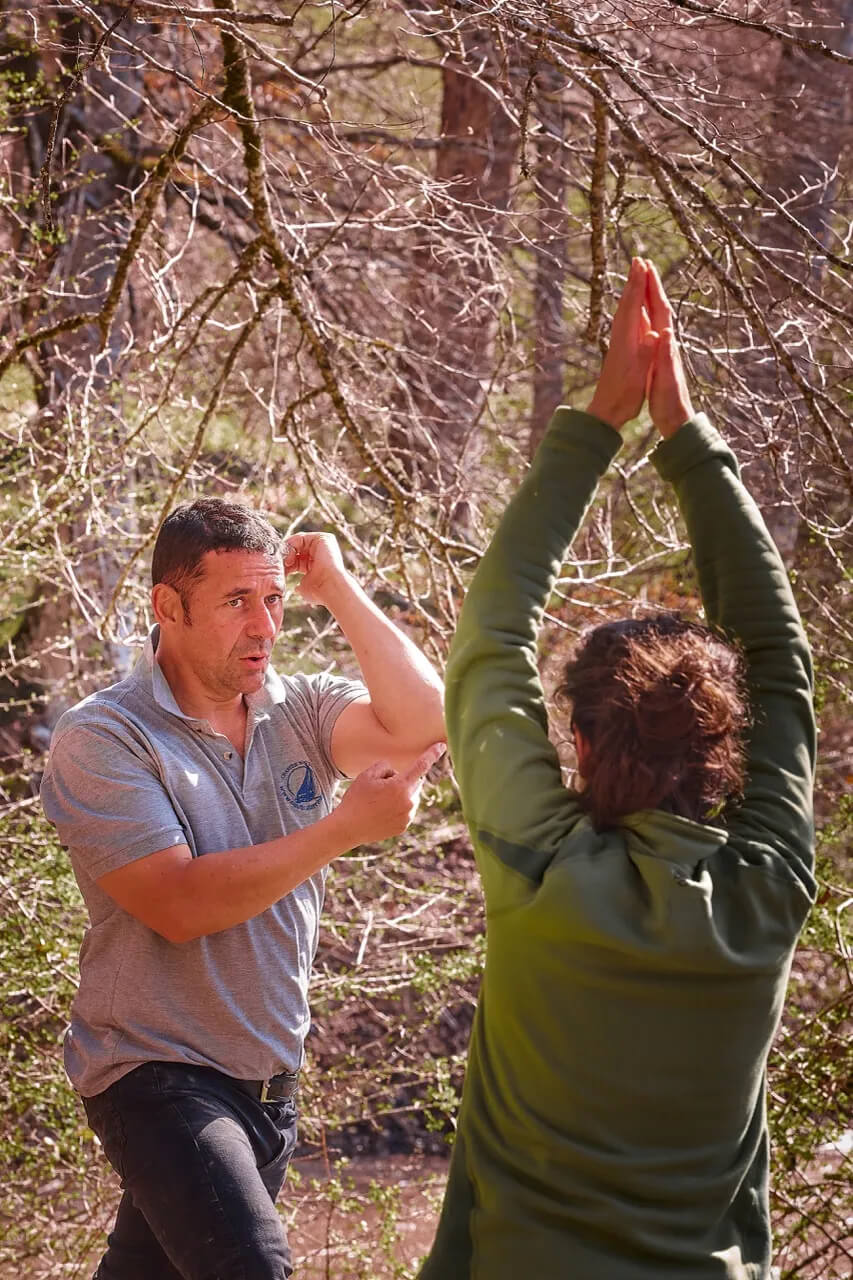
    Instructor guiding a participant through a yoga posture during an outdoor practice in the Pyrenean nature of the Navarre Pyrenees.

    The popular image of yoga—extremely flexible bodies, flawless postures, serene beaches—has shaped an expectation that discourages many people from even trying. It has created the belief that yoga is only for those who are already strong, bendy, or physically confident.

    But the truth is far more inclusive.

    Yoga is one of the most adaptable and accessible wellbeing practices available today.
    You don’t need to touch your toes, balance for minutes at a time, or have a perfect body. You simply need a willingness to breathe, learn, and listen.

    This article unpacks, from a scientific and educational perspective, why flexibility is not a prerequisite, how the nervous system regulates mobility, and why slow, consistent practice transforms the way you move, breathe, and inhabit your body.

    Why So Many People Think They Must Be Flexible Before Starting Yoga

    Instagram-perfect images and glossy magazine visuals have reinforced a narrow idea:

    “Yoga is for people who are already in great shape.”

    This misconception hides the true origin of yoga as a discipline of inner awareness, where postures (āsanas) were not designed to showcase athleticism but to prepare the body and mind for deeper states of presence.

    ???? What Modern Science Tells Us

    Flexibility is not a fixed trait, nor something you are born or not born with. Research shows that it depends on:

    Your nervous system, which decides how far your body allows you to move.

    Your breathing patterns, influencing tension and ease.

    Progressive practice, which teaches the body to feel safe.

    This means that flexibility develops with practice, not before it.

    The Nervous System: The Real Regulator of Your Mobility

    For years, people believed that flexibility depended solely on muscle tissue—longer muscles meant greater range. Today, we know that flexibility is primarily a neurophysiological process.

    H3 – Why Stretching Feels Intense When You’re Not Flexible

    The sensation of tightness is often not because the muscle is physically short, but because your nervous system interprets the movement as unfamiliar or unsafe.

    This triggers:

    • Protective tension
    • A limited range of motion
    • Heightened perception of discomfort

    It’s a safety mechanism, not a sign of deficiency.

    How Yoga Changes This Response

    Through breath awareness, mindful attention, and slow, progressive movement, yoga:

    • Reduces protective responses
    • Teaches the nervous system to feel safety
    • Increases your natural range of motion without forcing

    This is why we say yoga doesn’t push—yoga educates.

    The Strength Myth: You Don’t Need to Be “In Shape” to Begin

    Strength is not a prerequisite for yoga. Instead, yoga gently develops:

    • Functional muscle activation
    • Postural awareness
    • Balance and core stability
    • Integration between breath and movement

    The Kind of Strength Yoga Builds

    Unlike traditional workouts, yoga strengthens the body through:

    • Low-impact, full-body activation
    • Improved neuromuscular coordination
    • Stabilisation of deep core structures
    • Reduced muscular tension from stress

    You don’t need strength to start practicing yoga.
    You gain strength because you practice yoga.

    Yoga for Every Body: What Evidence Shows

    Research across physiotherapy, mindfulness, somatic education, and rehabilitative movement confirms that:

    Gentle progression, conscious breathing, and mindful movement improve mobility, balance, strength, stress regulation, and overall well-being.

    This makes yoga a highly effective practice for people who are:

    • Sedentary
    • Experiencing stiffness
    • Living with stress or anxiety
    • Recovering from injuries (with guidance)
    • Older adults
    • Carrying extra weight
    • Managing chronic discomfort

    Benefits Supported by Scientific Studies

    Studies show that yoga:

    • Reduces chronic lower back pain
    • Improves respiratory and cardiovascular efficiency
    • Enhances sleep quality
    • Regulates the autonomic nervous system
    • Lowers stress and anxiety markers
    • Boosts mobility and proprioception

    Yoga works because it integrates movement, breath, and awareness, three pillars of long-term well-being.

    If You Can Breathe, You Can Do Yoga

    The beauty of yoga lies in its simplicity. You don’t need a specific body or athletic background. You need:

    1. Conscious Breathing

    Breathing shapes your nervous system.
    When breath becomes calm, the body follows.

    It reduces tension, increases mobility, regulates emotions, and anchors presence.

    2. Inner Listening

    Yoga teaches you to tune into your body—not judge it.

    Inner listening is a skill everyone can develop, regardless of mobility level.

    3. Moving From Where You Are Today

    You don’t start yoga from your “ideal body”.
    You start from your real body.

    Your practice adapts to your reality, not the other way around.

    4. Respecting Your Natural Rhythm

    Progress comes from consistency, not intensity.

    A gentle, regular practice is more transformative than a forceful approach.

    The Best Types of Yoga If You’re Not Flexible or Strong

    Some styles are particularly supportive for beginners or those with limited mobility:

    1. Gentle or Restorative Yoga

    Ideal for reconnecting with your body, reducing stress, and improving mobility through soothing postures supported with props.

    2. Traditional Hatha Yoga

    A slower pace that allows you to feel alignment, breathing, and stability in each posture.

    3. Beginner-Friendly Yoga Classes

    Many retreat centres and online platforms offer progressive introductions that emphasise learning rather than performing.

    4. Chair Yoga

    Perfect for older adults, people with injuries, or those seeking low-impact movement.
    Still yoga. Still transformative.

    Real People, Real Changes

    “I arrived not even able to touch my knees. I still can’t touch my toes, but I sleep better, my back hurts less, and I breathe differently.”

    — Marta, 56

    “I always thought yoga wasn’t for me because I’m so stiff. Now I practise 20 minutes a day, and I feel more at peace.”

    — Javier, 48

    “At first I felt clumsy. But I learned that yoga isn’t about looking good—it’s about inhabiting yourself.”

    — Laura, 37

    Common Objections, Clear Answers

    “I’m not flexible; I can’t do yoga.”

    That’s exactly why yoga is for you.
    Flexibility is a result of practice, not a requirement.

    “I’m out of shape.”

    Yoga doesn’t demand that you be in shape.
    It helps you feel better in the shape you have now.

    “I have injuries, limitations, or extra weight.”

    Yoga adapts to your body.
    Safe variations exist for every physical condition.

    Real Yoga Begins When You Stop Forcing Yourself

    When you release the idea of perfection.
    When your breath slows.
    When you listen to your body without judgement.
    When movement becomes a conversation rather than a performance.

    Yoga transforms not by pushing harder, but by softening into awareness.

    Conclusion: Yoga Is Not for Perfect Bodies — It’s for Real People

    Whether you struggle to bend forward, your legs tremble, or you don’t know the names of the postures, none of that matters.

    Yoga doesn’t ask for perfection.
    It asks for presence.

    Start from where you are.
    With what you have.
    With who you are.

    And yoga will gradually open not only your body,
    but also your way of living inside it

    A Final Invitation from the Retreat Center Yoga Pirineo

    In the quiet beauty of the Navarre Pyrenees, surrounded by wild nature and the deep silence that defines this region, the Retreat Center Yoga Pirineo welcomes people of all ages, abilities, and life stories.

    Here, you don’t need flexibility or strength.
    You need openness, curiosity, and the simple desire to begin.

    We guide you step by step—through mindful breathing, accessible movement, and meditative presence—so you can reconnect with your inner calm and rediscover your body with kindness.

    Your practice starts exactly where you are.
    And here, you are more than enough.


  • Summer: A Chance to Blossom from Within

    Summer: A Chance to Blossom from Within

    Summer: A Chance to Blossom from Within

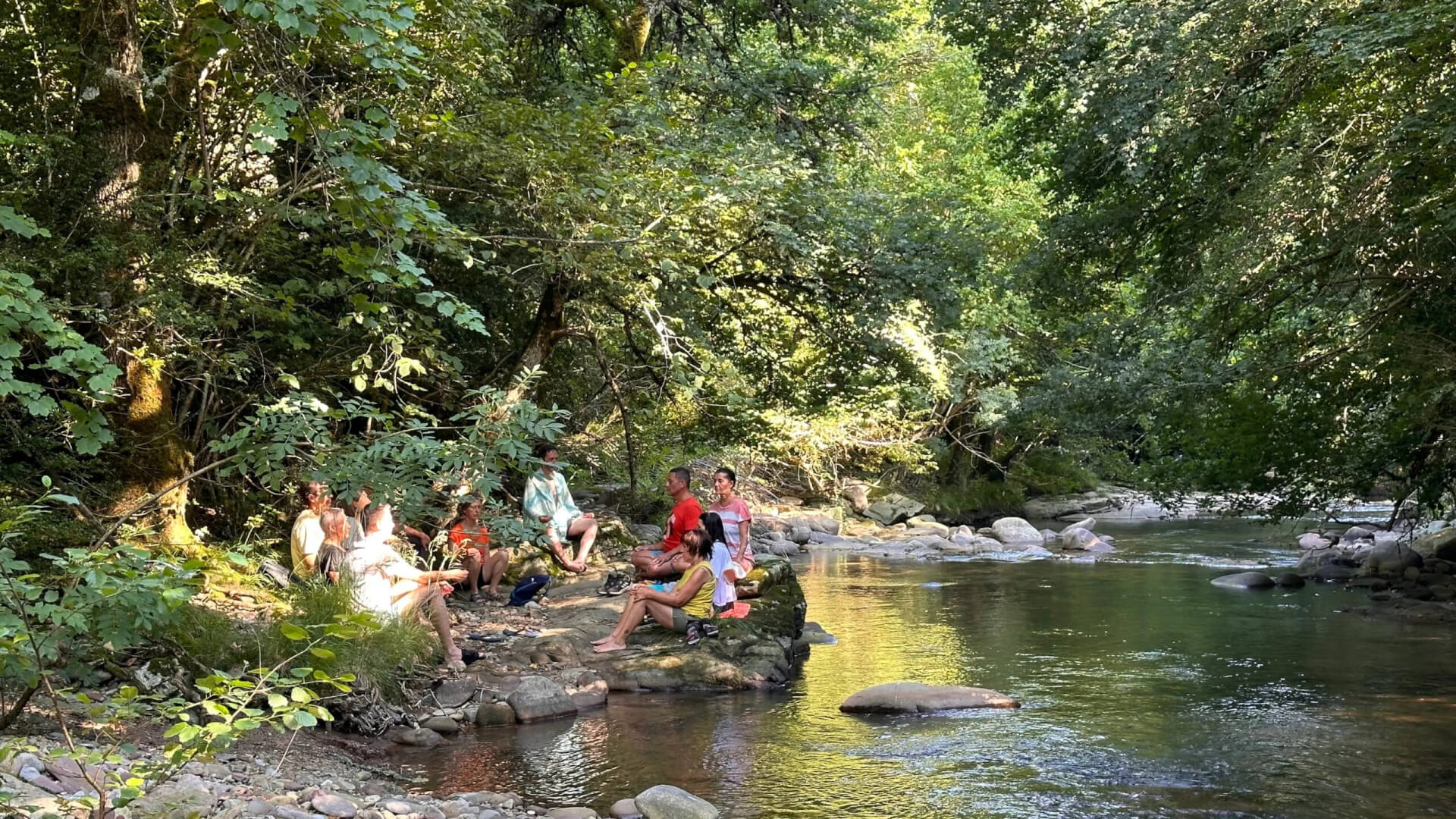
    Group practising meditation and inner listening by a river in the Navarre Pyrenees, surrounded by trees and soft summer light.

    In many Eastern traditions, summer is linked to the element of fire, to passion, to outward growth.
    It’s the season in which everything reaches its peak of light and expression. Nature is in full splendour; rivers run bright, leaves shimmer, and the days feel endless.

    But when we look more closely, summer also teaches us something subtler:

    • Live with an open heart.
    • Let light come in without resistance.
    • Show who you truly are, without fear.
    • Breathe fully, without holding back.

    Spiritually, this is the ideal moment to ask yourself:

    What part of me is ready to be seen with more truth and authenticity?
    Where do I still hold back, hide or hesitate?
    What is quietly opening inside me this summer?

    The fire of the season illuminates inner corners that remain dormant at other times of the year. And when lived consciously, summer becomes a kind of inner laboratory — a space for genuine inner transformation, a doorway into a freer way of being.

    A Summer Yoga Retreat: Returning to the Body, the Present Moment & the Earth

    At our retreat center in the Navarre Pyrenees, summer feels like an awakening.
    The natural surroundings, the fresh mountain air and the soft murmur of the river create a setting that invites you to melt tension, release layers and settle into a more authentic rhythm.

    Here, practising yoga outdoors becomes an act of presence.
    It’s not just movement: it’s expanded breathing, skin warmed by the early sun, a chance to listen to the silence, to feel the Pyrenean nature beneath your feet.
    It’s a way of returning to the earth with renewed clarity.

    Instead of escaping the heat, we learn to channel it.
    We let the inner fire transform itself into clarity, conscious movement and stable joy.
    Yoga sessions don’t end on the mat — they continue during meditative walks, quiet moments, shared silences and the softened gaze you take back home.

    Summer is experienced differently here.

    What Makes a Summer Retreat Unique?

    Solar Energy Working in Your Favour

    Light stimulates the nervous system, uplifts your mood and activates natural pathways of well-being.
    Surrounded by nature, this energy doesn’t scatter — it grounds itself into your body as vitality and balance.

    Yoga Without Walls

    Practising at sunrise or sunset, with the sound of the forest and the cool mountain breeze, completely transforms the experience.
    The body opens differently.
    The breath widens.
    The mind softens into clarity.
    It’s a form of yoga that breathes with the landscape.

    Living, Seasonal Nourishment

    In summer, the body naturally asks for lightness.
    During the retreat, we offer fresh, natural, seasonal foods that support the body’s inner rhythm of cleansing and renewal.
    Nothing heavy. Nothing draining.
    Just what brings inner balance and renewed energy.

    Fertile Silence

    Although summer is often associated with expansion, it also offers a beautiful territory for silence.
    Walking without speaking.
    Seeing without rushing.
    Being without needing anything.
    This kind of natural silence nourishes the heart and rests the mind.

    Frequently Asked Questions

    ❓Is it too hot to practise yoga in summer?

    Not here.
    In the Navarre Pyrenees, the climate remains gentle, even in July and August.
    Sessions take place at soft hours (morning and late afternoon), and many of them outdoors under natural shade.
    The river and trees keep the air naturally cool.

    ❓Do I need previous yoga experience?

    Not at all.
    Our retreats welcome all levels.
    The practice adapts to your pace, your body and your moment.
    It’s not about technique — it’s about willingness.
    If you can breathe consciously, you can join.

    ❓Can I come on my own?

    Yes — and most people do.
    This is a safe, friendly space where you don’t need to prove anything.
    You don’t have to know anything.
    You only need to be here, rest and reconnect with yourself.

    ❓What do we do besides yoga?

    Alongside daily practice, we offer:

    • Meditative walks along Pyrenean trails
    • Guided meditation and mindful breathing
    • Spaces for rest, reflection and inner silence
    • Optional satsang or sharing circles
    • Free time just for you — without rush, without demands

    How to Live Summer as an Inner Path (Even If You Don’t Attend a Retreat)

    If you can’t join us this year, you can still align yourself with the energy of the season.
    Small gestures create spacious changes. Here are some ideas:

    ✔ Practise yoga outdoors (even 15 minutes)

    Movement plus nature cleans the mind and expands the breath.

    ✔ Wake up with the sun

    Use the quietest moment of the day for something just for you.

    ✔ Drink water consciously

    As if each sip were recharging you from within.

    ✔ Say yes to what feels good

    And no to what no longer resonates.
    Summer asks for honesty.

    ✔ Surround yourself with natural beauty

    Maybe the mountains… or maybe a single plant near your window.
    Beauty is a doorway.

    These small, everyday rituals have extraordinary power.

    Live Summer as the Open Door It Truly Is

    You don’t need anything extraordinary.
    Just open a little more.
    Breathe deeply.
    Be truly present.

    A summer yoga retreat is not a pause from the world — it’s a way of returning to it with more strength, more clarity and more inner peace.

    And also — perhaps above all — with more kindness and love towards yourself.

    Summer at Centro de Retiros Yoga Pirineo becomes a gentle invitation to reconnect with nature, with your body, and with the inner freedom that this season naturally awakens.


  • Summer: Expansion, Vitality and Outdoor Yoga (Part 2)

    Summer: Expansion, Vitality and Outdoor Yoga (Part 2)

    Summer: Expansion, Vitality and Outdoor Yoga (Part 2)

    People sitting and standing by a small waterfall in the green landscape of the Navarre Pyrenees during an outdoor yoga retreat.

    When summer arrives, something within us awakens. The body feels lighter, the daylight stretches gently into the evening, and the warm air invites us outside. It’s as if a deeper layer of life—often hidden beneath routines, screens and obligations—begins to breathe again.
    As if the soul itself were asking for space, expression, expansion.

    In yoga philosophy and many nature-based traditions, summer represents fire, expansion and vitality. It is the season of outward action, of growth, of energy activated by warmth and light. At the same time, it is an invitation to meet the world from a more authentic, alive and open place.

    In this article, we explore how summer can become an inner path, a phase that goes far beyond holidays and becomes a real opportunity for inner transformation.
    And of course, we explain why a yoga retreat surrounded by Pyrenean nature in the Navarre Pyrenees can feel profoundly renewing, luminous and deeply grounding during this season.


    Summer as a Metaphor for Expansion

    Each season has its own energy. If spring is rebirth, summer is fullness. What began as a seed now carries fruit. What was quiet now blossoms.
    Summer encourages us to open, to move, to share, to shine.

    It invites us to:

    • Step outdoors and reconnect with the natural world.
    • Open to others, to conversation, to presence.
    • Act from authenticity, not obligation.
    • Receive sunlight and warmth as a form of vital nourishment.
    • Allow ourselves to grow beyond old limits.

    On a deeper level, summer also invites us to pause and ask:

    Where am I ready to open more?
    Which part of my life is ready to blossom now?
    What needs light in order to grow?

    These questions are not meant to be analysed. They are meant to be felt—slowly, honestly, with inner listening.

    Yoga and Nature in Summer: A Direct Channel to What Matters

    Practising yoga in summer—especially in a natural setting like the Navarre Pyrenees—is a very different experience from winter or spring. The body becomes more supple, the breath feels wider and the skin welcomes the sun as if it were remembering something ancient.

    Why does summer influence practice so deeply?

    • The body feels more open and receptive.
      Asanas flow more naturally, stretches feel smoother, and movement becomes intuitive.
    • Breathing in nature intensifies the regenerating effect.
      The oxygen-rich forests, the freshness of dawn and the breeze of sunset soften the nervous system.
    • The skin opens to warmth and light.
      And with that, emotional layers often soften too, allowing more sensitivity and inner listening.
    • Your inner rhythm aligns with the sun.
      Longer daylight creates clarity, vitality and a sense of direction.

    A summer yoga retreat is not just rest.
    It is a reconnection with yourself, experienced through joy, vitality and the deep presence that arises when the Irati Forest and the mountains become your companions.

    Benefits of a Summer Yoga Retreat

    Summer retreats have their own energy—open, spacious, luminous. Days feel longer, lighter and full of possibility. There is time to move, to rest, to wander in silence, to let nature guide your inner rhythm.

    Here are some of the most powerful benefits:

    1. Energy in Expansion

    The sun naturally activates our vital energy.
    When that fire is combined with conscious practices—yoga, pranayama, meditative walks, mindful breathing—it creates a strong internal impulse. You feel both energised and centred.

    People who attend summer retreats often say:

    “I feel a vitality that I didn’t realise I had lost.”

    Summer wakes up inner fire.

    2. Wide, Open Spaces for Practice

    Golden sunrises, fresh meadows, the shade of ancient trees, the sound of water running down a mountain stream…
    Outdoor practice offers a direct connection with Pyrenean nature, turning yoga into something effortless and intuitive.

    Think of:

    • Sunrise sessions with soft mountain light.
    • Pranayama among trees.
    • Meditation in nature by rivers or waterfalls.
    • Mindful hiking through shaded forest paths.

    Nature becomes your sacred space, teacher and ally.

    3. A Deeper Connection with Your Body

    We naturally feel lighter in summer. Clothing is more relaxed, the body moves with ease and vitality flows more freely. This physical lightness often opens emotional space too.

    It becomes easier to:

    • Release tension stored during the year.
    • Explore new postures gently and fearlessly.
    • Rediscover the pleasure of inhabiting your body.
    • Listen to your emotional landscape with kindness.

    Summer invites inner listening and compassion.

    4. Strength to Make Decisions

    Summer is traditionally associated with fire, direction, clarity and momentum.
    It’s the perfect moment to gain perspective, reconnect with purpose and decide what truly matters.

    After a retreat, many people express the same feeling:

    “I finally know my next step.”

    Light brings clarity.
    Presence brings direction.
    Silence brings truth.

    What Happens After the Retreat?

    The real impact of a retreat is often felt not during the retreat itself, but in the weeks that follow.
    It’s what happens when you return home, back into your usual environment, with renewed awareness.

    When you live summer consciously, something shifts:

    • Your energy feels renewed.
    • Your mind becomes clearer.
    • Your habits shift naturally towards well-being.
    • You sense more inner balance and stability.
    • You feel stronger, more grounded, more aligned.

    This prepares you for autumn, the season of integration and reflection.
    A summer retreat leaves a luminous trace that accompanies you long after you return from the mountains.

    Frequently Asked Questions — Summer Yoga Retreats

    ❓ Is it too hot to practise yoga in summer?

    Not in the Navarre Pyrenees.
    Our retreat center is surrounded by lush Pyrenean nature, where the climate remains gentle even in July and August.
    We practise at sunrise and sunset, enjoying fresh temperatures, natural shade, forest breeze and sometimes riverside sessions.

    ❓ Are the retreats suitable for beginners?

    Absolutely.
    All our retreats are designed for small groups of all levels, with posture adaptations, clear guidance and a strong focus on presence, breath and rest.

    ❓ What activities are included besides yoga?

    • Meditation in nature
    • Mindful hiking
    • Pranayama and conscious breathing
    • Quiet moments for inner listening
    • Time for reading, resting or simply being
    • Healthy, seasonal meals aligned with summer energy
    • Gentle guidance for your inner path

    ❓ Can I come alone?

    Yes.
    In fact, more than 80% of participants come alone.
    Summer is an ideal moment for that small but meaningful journey within.

    Living Summer as an Inner Path — Simple Daily Practices

    Even if you can’t join a retreat, summer naturally invites a different pace.
    Here are a few simple ways to live this season with consciousness and depth:

    1. Wake up early and walk with the first light

    Sunrise regulates your inner rhythm and awakens your life force gently.

    2. Practise gratitude each morning

    Three breaths.
    Three things you are grateful for.
    Three minutes of inner silence.

    3. Drink water consciously

    As if hydrating your energy, not only your body.
    Let water become a small ritual of presence.

    4. Let go of what no longer resonates

    Summer is also a purifying fire.
    Release habits, emotions, obligations or patterns that feel heavy.

    5. Share from authenticity

    Summer opens the heart.
    Allow yourself to connect with others from honesty and presence.

    A Closing for This Summer Cycle

    Summer is not just a season.
    It is a doorway.
    A doorway to the outer world—and to your most luminous inner self.

    A yoga retreat in summer is much more than a holiday.
    It is an invitation to blossom, to expand, to reconnect with your inner light, to shine from the inside out.

    In the Navarre Pyrenees, the mountains, the sun, the rivers, the silence and the group create the perfect setting for an awakening of consciousness that feels natural and gentle.

    You don’t need anything more than your presence, your breath and your willingness to open.

    Because sometimes, true transformation happens when you simply allow yourself to be outdoors… with an open soul.


  • Can I Join a Yoga Retreat on My Own? (Part 2)

    Can I Join a Yoga Retreat on My Own? (Part 2)

    Can I Join a Yoga Retreat on My Own? (Part 2)

    Woman sitting in meditation on a rock above a waterfall, surrounded by nature and silence in the Navarre Pyrenees

    A gentle guide to understanding why coming alone might be one of the most transformative decisions of your life

    Introduction: when the question rises

    If you’re here reading this, chances are the idea of joining a Yoga and Meditation retreat has already taken root inside you. Maybe it has been whispering for days, or maybe it appeared suddenly, like a quiet intuition saying:

    “I need to pause. I need to reconnect. I need space for myself.”

    But just when the idea begins to take shape, one question often stops everything:

    “What if I come alone?”

    This article is for you if you feel that mix of longing and uncertainty. Here you’ll find reassurance, clarity, and a warm invitation to trust yourself. Because yes — you can absolutely come alone, and it might become one of the greatest gifts you ever offer yourself.

    At our retreat centre in the Navarre Pyrenees, more than 80% of participants come on their own. And the moment they arrive, they realise something essential:

    You’re not coming alone — you’re coming with yourself.
    And that is powerful.

    Travelling alone… but with yourself

    A profound act of self-care

    Travelling alone to a Yoga retreat is not a random decision. It’s a quiet, brave declaration. It’s saying:

    “Today, I’m my own priority.”

    And it’s not selfishness — it’s self-care, inner listening, and a way of reclaiming your own voice in the middle of a noisy world.

    A retreat is a place where you don’t need to impress anyone, perform any role, or meet expectations. It’s a sacred space where you can breathe, rest, feel, and remember who you are beneath the layers of daily life.

    Feeling nervous is completely natural

    Most people who come alone admit that, before booking, they felt some fear:

    • “What if I don’t fit in?”
    • “What if I feel awkward?”
    • “What if everyone else comes in pairs or groups?”

    Let us tell you something essential:

    That fear is not reality — it’s just a feeling.
    And feelings shift the moment you allow yourself to step into the experience.

    The environment changes everything

    Our retreats take place in the heart of the Navarre Pyrenees, surrounded by Pyrenean nature and an embracing silence that softens rather than overwhelms. The proximity of places like the Irati Forest or Roncesvalles creates an atmosphere where introspection becomes surprisingly easy… almost effortless.

    Here, time slows down.
    Your breath deepens.
    Your mind softens.
    Your heart relaxes.

    And that environment makes coming alone feel less like a leap and more like a homecoming.

    ???? Why coming alone can be deeply transformative

    1. You don’t have to take care of anyone else

    When you travel with someone, even unintentionally, your experience adapts to them:
    shared timing, preferences, conversations, energy.

    When you come alone, the entire retreat is yours.
    You choose how much to talk, how much to rest, how much to participate, how much silence you need.

    This freedom is one of the greatest gifts of a retreat.

    2. You can be yourself — fully, gently, honestly

    Daily life often asks us to hold roles:
    the strong one, the organised one, the social one, the supportive one.

    At a retreat, you don’t need any of those roles.
    You can let yourself soften, breathe, cry, laugh, stretch, rest, or simply be.

    It’s a space where being yourself is more than enough.

    3. Chosen solitude opens the inner path

    When you decide to come alone, something shifts inside:
    a willingness to listen deeply to your inner world.

    In that inner silence, answers appear.
    Truths you had put aside rise gently.
    Needs you had forgotten come into focus.

    This is the beginning of inner transformation.

    4. You connect with others from a more authentic place

    Arriving on your own makes interactions lighter, more genuine, and more present.
    Not from the “What do you do?” place, but from the “How are you?” place.

    This is where deep connection emerges naturally — sometimes lasting a weekend, sometimes much longer.

    5. The energy of the group holds you

    Even if you come alone, you’re never alone.
    There is a quiet sense of community that arises when people gather with the same intention:
    to breathe, to rest, to reconnect.

    It’s a tribe formed through presence rather than words.

    And that shared presence heals.

    Common worries — and calm, honest answers

    ❓“What if I don’t fit in?”

    A retreat is not a social event or a party.
    There is nothing to “fit” into.

    You can talk… or not.
    You can participate… or rest.
    Both are perfect.

    ❓“What if I feel uncomfortable at the beginning?”

    It’s normal to feel slightly unsettled on arrival.
    But that melts quickly.
    The landscape, the gentle welcome, the first guided meditation — everything invites you to relax.

    ❓“I’m shy or introverted. Is a retreat right for me?”

    Many people who join alone are introverts.

    And that’s precisely why retreats work so well:
    no pressure to talk, to share, or to show up socially.

    Connection happens naturally, without effort.

    ❓“What if I miss my family or partner?”

    You might.
    And that’s okay.

    But remember: you’re not escaping them — you’re returning to yourself.
    And when you come back grounded, rested, and clear, you return to them in a more loving, real way.

    ❓“What if I feel lonely during the retreat?”

    Most people who come alone say, at the end:

    “I didn’t feel lonely for a single moment.”

    There is something powerful about being in silence with others who are also walking their inner path.

    Real stories from women who came alone

    Clara, 39

    “I was scared of being alone, but it was the best decision I could’ve made. I felt a sense of freedom I hadn’t experienced in years.”

    Mónica, 51

    “I came alone because I desperately needed to stop. I left feeling more connected and alive than ever. I met wonderful people — but above all, I finally listened to myself.”

    Laura, 44

    “I didn’t know anyone, yet being there felt so easy… so welcoming. I felt cared for without even asking.”

    What if this retreat becomes a turning point?

    Many participants tell us that their first retreat alone marked a before and after in their lives.

    A pause.
    A reorientation.
    A moment of clarity.
    A gentle awakening of consciousness.

    What begins as “just a weekend to rest” often becomes the seed of inner awakening.

    And if you’re reading this, perhaps that seed is already inside you.

    In essence: yes, you can come alone — and perhaps you need it more than you think

    A Yoga and Meditation retreat is not simply a break:
    it is a return to your inner peace.

    Coming alone means coming with your whole being — without distractions, without roles, without noise.

    It is an act of loving-kindness towards yourself.

    Don’t wait for someone to come with you.
    Sometimes the greatest act of self-love is taking the first step alone.

    Because the most important journey is not the one that takes you to the retreat.

    It’s the one that takes you inward.


    Closing words from the Navarre Pyrenees

    Here at Centro de Retiros Yoga Pirineo, in the peaceful landscape of the Navarre Pyrenees, we witness every week how people who dare to come alone find clarity, rest, deep connection, and a renewed sense of life.

    If this text resonated with you, maybe your moment is now.


  • How to Keep Practicing What You Learned After Your Retreat

    How to Keep Practicing What You Learned After Your Retreat

    How to Keep Practicing What You Learned After Your Retreat

    Couple practicing yoga in prayer pose during a retreat at the Navarre Pyrenees Retreat Center

    The real journey begins when you return home

    You’ve just completed a yoga and meditation retreat. Maybe it lasted three days, or perhaps a full week. What matters is that something inside you has shifted. You’ve touched a new sense of clarity and inner peace that you didn’t even know was possible. You breathed without rushing. You walked in silence. You listened to your body in a completely different way.

    And then… you return home.

    To the noise.
    To the workload.
    To notifications, obligations, and the familiar fast rhythm of daily life.

    And suddenly the big question appears:

    How do I keep practicing what I learned during the retreat now that I’m back in my everyday life?

    You’re not alone. This question is deeply human and genuinely meaningful. In this article, you’ll find practical and emotional guidance to keep your transformation alive and weave it naturally into your daily routines.


    1. The retreat doesn’t end when you leave

    A retreat is not a pause—it’s a seed.
    What you experienced during those days begins to grow back home, where real life happens. The retreat offers a sacred space to reconnect with yourself, but integration takes shape through your choices, your habits, and your way of being present in daily life.

    Don’t expect to recreate the same silence or the same landscape. You don’t need to. The purpose is not to imitate the environment of the retreat, but to carry with you the awareness, presence, and joy of living that emerged there.

    Let the seed unfold naturally in your everyday rhythm.


    2. Create a small daily ritual (even 5 minutes are enough)

    A daily practice doesn’t have to be long or complicated. What matters is that it feels meaningful and sustainable. You can start with something as simple as:

    • Mindful breathing for five minutes when you wake up.
    • Sitting in inner silence with one hand on your heart.
    • Three gentle Sun Salutations to greet the day.
    • A moment of gratitude before going to bed.
    • A short meditation in nature if you have a garden or nearby park.

    The key is a small commitment with yourself, a daily reminder that you are choosing presence.

    A practical tip:
    Choose a fixed time and place. When the practice becomes predictable, it becomes steady.


    3. Bring yoga beyond the mat

    One of the greatest gifts of a retreat is understanding that yoga is not only a sequence of postures—it is a way of living.

    You can continue your practice even without doing asanas:

    • By listening without interrupting.
    • By walking without checking your phone.
    • By cooking with mindful attention.
    • By breathing deeply before answering an email.
    • By feeling grounded before entering a difficult conversation.
    • By pausing to notice your emotions rather than reacting automatically.

    Presence is practice.
    Yoga happens in the way you inhabit your life moment by moment.

    Don’t underestimate simple moments; they often carry the greatest transformation.


    4. Write about your experience: it deserves a place in your life

    After a retreat, writing can be a powerful way to anchor and deepen what you lived. You might want to explore:

    • What you felt.
    • What surprised you.
    • What you discovered about yourself.
    • What you wish to keep alive.
    • What you’re ready to let go of.
    • What practices nourished you most.

    This reflective writing turns your experience into conscious learning. You can even write a letter to your future self, a reminder for the days when you feel disconnected.

    Your retreat becomes a map you can return to.


    5. Take care of your environment: small changes that support your energy

    Your environment influences your inner world far more than you think. After a retreat, small changes can help you sustain your renewed energy:

    • Create a simple sacred space or meditation corner.
    • Place an inspiring phrase on your desk.
    • Choose conscious music for your afternoons.
    • Keep your phone away from your bed.
    • Light a candle before dinner.
    • Bring nature into your home through plants or natural scents.
    • Surround yourself with people who respect your inner path.

    Your home doesn’t need to look like a temple.
    It just needs to remind you of the way you want to live.


    6. Don’t try to repeat the experience — focus on integration

    It’s natural to feel nostalgic about the retreat: the silence, the atmosphere, the new clarity. But integration doesn’t mean repeating what happened—it means bringing its essence into your daily reality.

    The goal is not to reproduce the same meditation or the same moment. It is to continue being the version of yourself that you discovered there.

    Everyday life becomes your real practice.


    7. Stay connected with your retreat community

    If you created bonds during the retreat, don’t lose them—they are precious.
    Sharing your ups and downs with people walking the same inner path can support your transformation in a meaningful way.

    In the Navarre Pyrenees Retreat Center, we always create a WhatsApp group for all participants. Use it. Ask questions. Share your progress or your challenges.

    And through our newsletter, we keep offering guidance, reflections, invitations to mindfulness, and updates about upcoming retreats in the Navarre Pyrenees—so you always feel connected with the community and with the Pyrenean nature that inspired your retreat.


    8. Be kind to yourself on difficult days

    There will be days when you don’t meditate.
    Days when your breathing feels rushed.
    Days when your mind runs wild.
    Days when your body simply wants rest.

    And that is perfectly okay.

    The inner path is not linear. Real transformation does not come from perfection but from self-kindness.

    Every time you choose to pause, even for a minute, you honour your process.
    Compassion is a powerful teacher.

    Remember: you can always return to yourself.


    9. Plan your next moment of reconnection

    Knowing you have another sacred pause on the horizon can be a source of motivation and inner calm. You don’t need another long retreat—start with something accessible:

    • A weekend yoga retreat.
    • A silent day at home.
    • A mindful hiking morning.
    • A meditative walk in the Irati Forest.
    • A workshop or guided meditation.
    • Time alone in nature and silence.

    Nourishing your energy is not a luxury.
    It is an act of self-love that benefits you and everyone around you.


    10. Remember who you were during the retreat

    When daily life pulls you into its rhythm, close your eyes and return to that moment in the retreat where you felt peaceful, present, and centered.

    Come back to your breath.
    Come back to your body.
    Come back to your inner light.

    Ask yourself:

    • What did I feel when I woke up there?
    • What was my energy like after the morning practice?
    • What did I learn about myself?
    • What awakened inside me?

    Your experience is still alive within you.
    Sometimes you just need to remember it with your heart.

    As we often say at the Navarre Pyrenees Retreat Center:

    “The real retreat begins now.”

    Integration is not a task to achieve—it is a living path.
    A gentle, powerful invitation to live with more awareness, gratitude, and inner peace.

    Every time you return to yourself, you honour your transformation.


    Closing Message

    May your inner path continue to flourish softly and steadily.
    And whenever you feel the need to reconnect more deeply with nature, silence, and your own inner light, remember that the Navarre Pyrenees Retreat Center is here—surrounded by the Pyrenean nature, the medieval setting, and the serene atmosphere of the Navarre mountains—to welcome you back home.